The time limit for a discrimination claim in 2026
Updated August 6, 2026
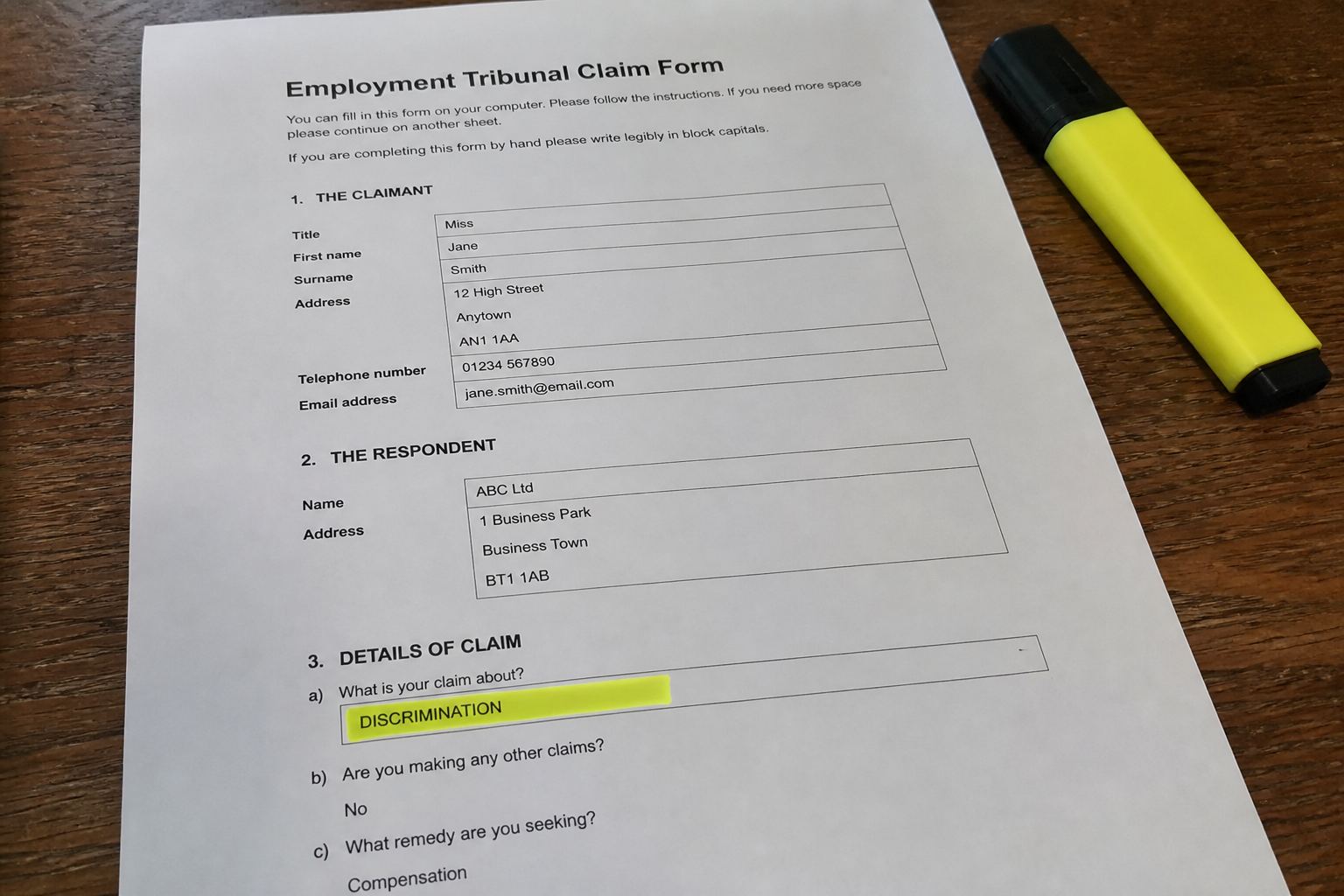
The time limit for a discrimination claim turns on one date: when the discriminatory act happened, not when you finally decide to do something about it. Under the transitional rule, acts from before 1 October 2026 still carry the old three-month clock, and only acts on or after that date get the extension to six months.
The starting point: three months less a day
Under the Equality Act 2010, the standard time limit for bringing a discrimination claim to an employment tribunal has long been three months less a day from the date of the act complained of. Miss it, and the tribunal can refuse to hear your claim at all, unless it agrees it's "just and equitable" to extend time, which is a high bar and never something to rely on.
What changes from 1 October 2026
The Employment Tribunal (Extension of Time Limits) (Miscellaneous Amendments and Transitional Provisions) Regulations 2026 double that window to six months less a day. Discrimination claims are explicitly covered, alongside unfair dismissal, whistleblowing, TUPE and Working Time Regulations claims. But the new regime only applies from 1 October 2026, and a transitional rule decides which set of rules actually governs your claim.
Regulation 10 is the key provision. It says the longer time limit applies only where the act or failure you're complaining about happened on or after 1 October 2026. If the discriminatory act took place before that date, even if you only find out about it, or only decide to claim, after 1 October, you're still working to the old three-month rule. The calendar date you happen to be reading this on doesn't matter. The date of the act does.
Why discrimination claims are trickier than most
For a straightforward unfair dismissal, the relevant date is usually easy to pin down: it's the effective date of termination. Discrimination claims are messier, because the Equality Act treats conduct extending over a period as done at the end of that period, not at the first instance. Lawyers call this a continuing act.
Say a manager has been making discriminatory comments and decisions about you for eight months, some before 1 October 2026 and some after. If a tribunal decides that's one continuing course of conduct rather than a string of separate incidents, the "date of the act" for time limit purposes is the last date in that course, not the first. That could pull the whole series into the new six-month regime, even though it started under the old one.
This is genuinely unsettled ground. The regulations don't spell out how a continuing act spanning the 1 October 2026 cut-off should be treated, and it hasn't been tested in the tribunals yet. Don't assume either way. If your situation involves a pattern of conduct rather than one isolated incident, work to the earliest possible deadline, and get advice on which regime a tribunal is likely to apply to your particular facts.
Acas early conciliation still pauses the clock
Whichever time limit applies to you, you generally can't lodge a tribunal claim without contacting Acas first. Early conciliation stops the clock on your time limit while a conciliator tries to resolve things, for a maximum of twelve weeks since 1 December 2025. You're also guaranteed at least one extra month after your Acas certificate is issued to lodge your claim, even if very little time was left when you contacted Acas. That protection applies regardless of whether you're on the three-month or six-month regime.
| Date of the discriminatory act | Time limit | Acas early conciliation |
|---|---|---|
| Before 1 October 2026 | 3 months less a day (old regime) | Stops the clock, plus at least 1 extra month after the certificate |
| On or after 1 October 2026 | 6 months less a day (new regime) | Stops the clock, plus at least 1 extra month after the certificate |
| Continuing course of conduct straddling the date | Depends on when the conduct ends; untested, take advice | Same protection either way |
Working out your actual deadline
Because the right answer depends on the exact date of the act, whether it forms part of a continuing course of conduct, and how long Acas conciliation runs for, working this out by hand is where people lose claims to simple date errors. Our employment tribunal deadline calculator is built around the 1 October 2026 transitional rule and the Acas clock-stop, and it will flag which regime applies once you enter the date of the act. For the wider picture of what's changing and when across employment law this year, our timeline of the Employment Rights Act 2026 changes sets it out in order.
If you're not sure whether what happened to you counts as one act or several, write down every incident with its date before you do anything else. That record is what a tribunal, or an Acas conciliator, will actually work from, and it's the surest way to know which side of 1 October 2026 your claim sits on.
The rule to hold onto: find the date of the act first, because every deadline in a discrimination claim, old regime, new regime, or Acas extension, is measured from that one date and nothing else.
Quick answers
- How long do I have to claim discrimination?
- Usually three months less a day from the act if it was before 1 October 2026, or six months less a day if it was on or after. A continuing act is generally timed from the last act.
- Can a tribunal extend a late discrimination claim?
- Yes, if it is just and equitable. That is a wider discretion than the 'not reasonably practicable' test used in ordinary unfair dismissal.
- Does a grievance pause a discrimination deadline?
- No. Only Acas early conciliation pauses limitation.