The time limit for an unfair dismissal claim in 2026
Updated September 2026
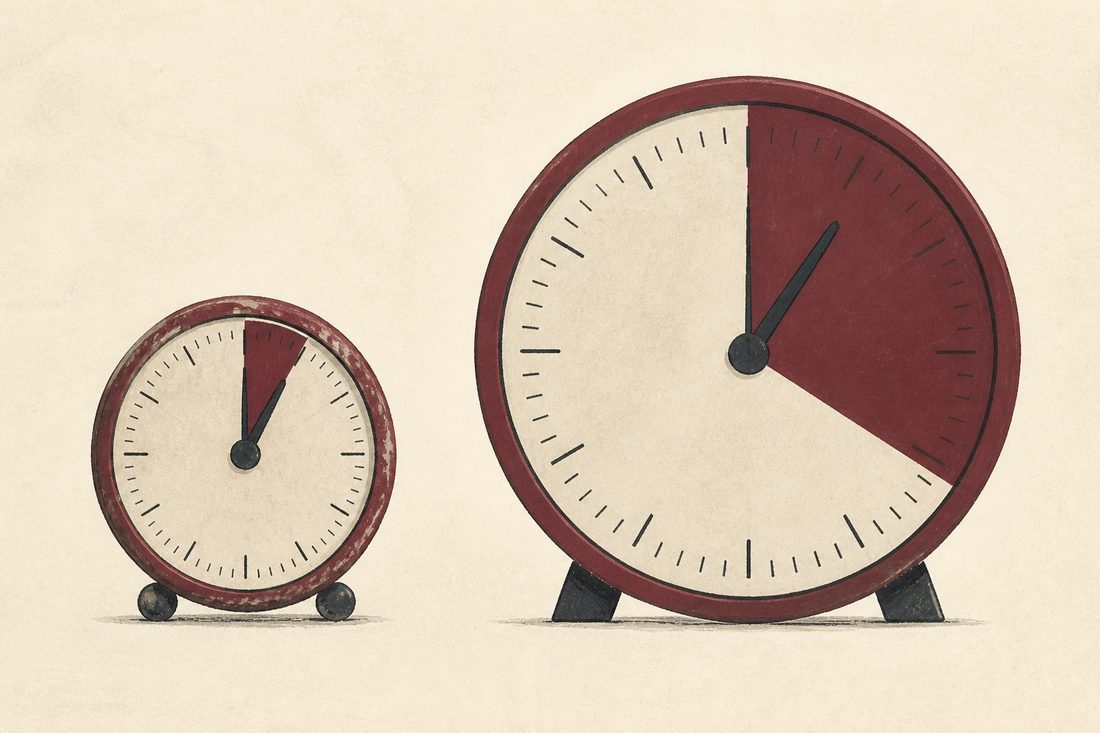
Unfair dismissal has two separate timing rules that people mix up. One is how long you have to file. The other is how long you needed to have worked before you can bring an ordinary claim at all. Both are changing, and they change on different dates.
Two clocks, not one
The filing deadline is measured from your effective date of termination (EDT). The qualifying period is measured from the start of your continuous employment to that same EDT. Missing either one usually ends the claim before a tribunal ever looks at whether the dismissal was fair.
If you resigned because of your employer's conduct, that is usually constructive dismissal, not a standard sacking. The filing clock still runs from the EDT. The difference is how that date is fixed.
The filing deadline
For most ordinary unfair dismissal claims the limit is three months less a day from the EDT if that date falls before 1 October 2026, and six months less a day if the EDT is on or after 1 October 2026. That is the same transitional rule that now covers discrimination, whistleblowing, TUPE and Working Time claims. The calendar date you read this is irrelevant. The EDT is what decides the regime.
| Effective date of termination | Standard filing limit |
|---|---|
| Before 1 October 2026 | 3 months less one day |
| On or after 1 October 2026 | 6 months less one day |
Acas early conciliation is still required in almost every case. Starting it pauses the clock, and you get at least one month after the certificate date even if almost no time was left when you contacted Acas. Since 1 December 2025 the conciliation window itself can run for up to 12 weeks.
If you miss the deadline, a tribunal can only extend time if it was not reasonably practicable to present the claim in time. That is a harder test than the “just and equitable” discretion used in discrimination claims. Do not plan on an extension.
The qualifying period
Ordinary unfair dismissal still needs two years of continuous service until 1 January 2027. From that date the Employment Rights Act 2025 is expected to cut the qualifying period to six months. There is no long transition: anyone with six months' service on 1 January 2027 should have protection that day, which includes people who started on or before 1 July 2026.
Early coverage of the Bill talked about day-one unfair dismissal. That is not what passed. If you are reading an article from 2024 or early 2025 that says there is no qualifying period, it is describing a draft, not the Act. Confirm the live commencement status on gov.uk or with Acas before you rely on the six-month figure for a dismissal that has not happened yet.
The compensatory award cap for ordinary unfair dismissal is also due to be removed from 1 January 2027. The basic award structure is unchanged. None of that helps if the claim is out of time.
Automatically unfair dismissal
Some dismissals are automatically unfair. The usual ones employees actually meet are pregnancy or maternity, whistleblowing, health and safety complaints, asserting a statutory right, and certain union or part-time worker situations. Those claims do not need the two-year (or later six-month) qualifying period. They still have a filing deadline, and they still need Acas early conciliation.
If the reason for dismissal is in that list, do not wait until you have “enough service.” The clock is already running.
Appeals and grievances do not pause the clock
An internal appeal, a grievance, or a promise from HR that they are “looking into it” does not stop limitation. People lose claims this way every week. The only pause that counts is Acas early conciliation. You can appeal and contact Acas on the same day. You should.
Raising a grievance the right way still matters for compensation and for the story a tribunal will hear. It is just not a substitute for protecting the deadline. See how to raise a workplace grievance.
Work out your date
Write down the EDT first. Then put that date into the tribunal deadline calculator. If you were also underpaid, made redundant, or treated as a continuing act of discrimination, those claims can have different start dates even when they come out of the same exit. The calculator will not invent the EDT for you.
This is general information for England, Wales and Scotland, not legal advice and not a substitute for Acas, a solicitor, or your union. Northern Ireland has a separate industrial tribunal system.
Quick answers
- How long do I have to claim unfair dismissal?
- Three months less a day if your effective date of termination is before 1 October 2026, and six months less a day if it is on or after that date. Acas early conciliation pauses the clock.
- How long do I need to have worked to claim ordinary unfair dismissal?
- Two years of continuous service until 1 January 2027. From that date the qualifying period is expected to fall to six months. Automatically unfair dismissals have no qualifying period.
- Does raising a grievance pause the tribunal deadline?
- No. An internal grievance or appeal does not stop the limitation clock. Only Acas early conciliation does that.