How to start Acas early conciliation, step by step
Updated August 6, 2026
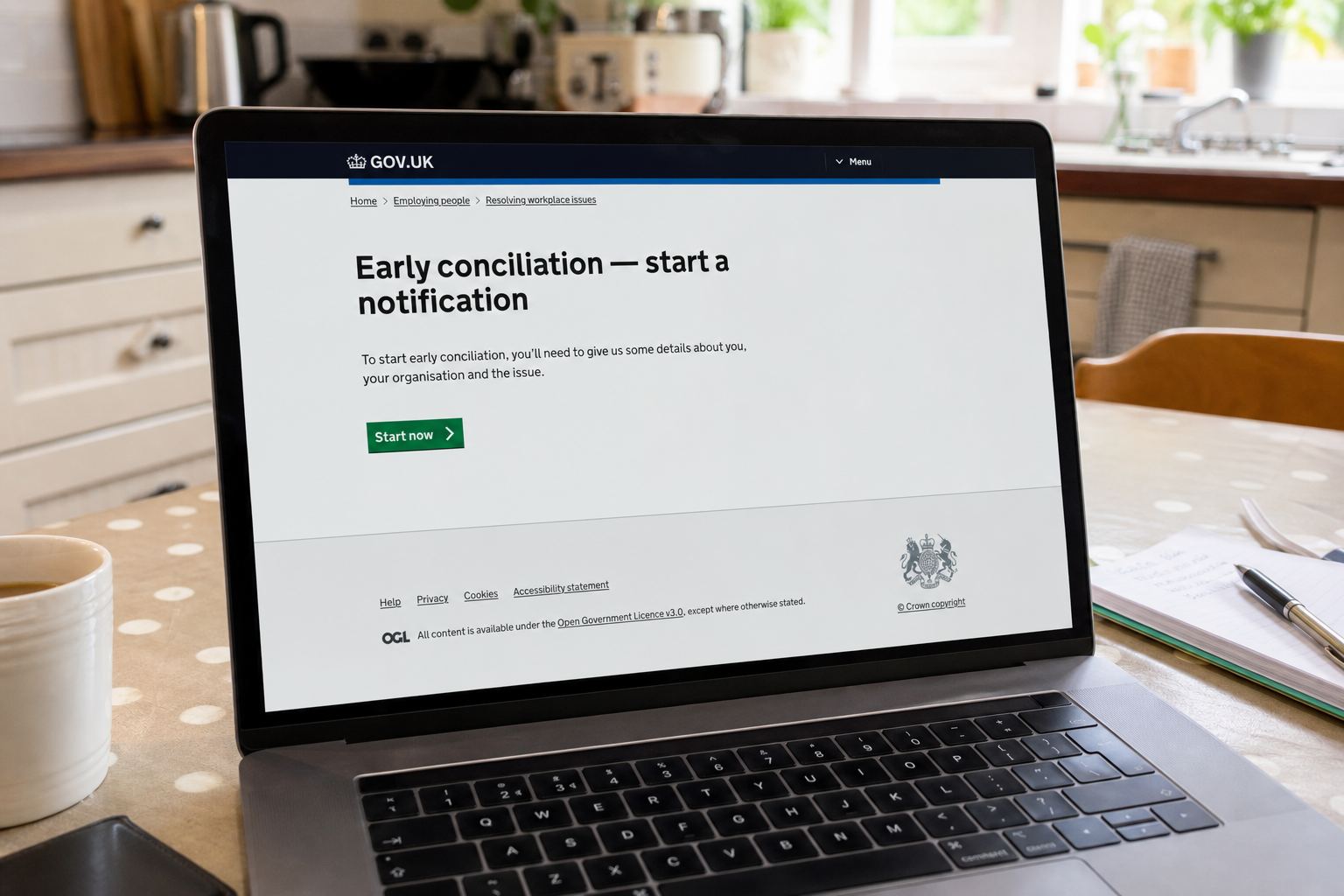
Twelve weeks is the maximum time Acas early conciliation can now run, more than double the six-week limit that applied before 1 December 2025. For most employees thinking about an employment tribunal claim, this is the first legal step, and it comes before the tribunal itself, not alongside it.
Notifying Acas is a legal requirement
Before you can lodge most employment tribunal claims, you have to notify Acas and go through early conciliation first. This covers unfair dismissal, discrimination, whistleblowing detriment, TUPE disputes and most other tribunal claims. There are narrow exemptions, but assume you need an Acas certificate unless you've specifically checked otherwise.
The point of the process is to let both sides settle without a hearing. It's run by a conciliator, an Acas staff member rather than a judge, and what you say during conciliation generally can't be used against you later if the case still goes to tribunal.
Step 1: submit the notification
You start by filling in the early conciliation notification form at acas.org.uk, or by calling the Acas helpline and giving the same information over the phone. Both routes ask for the same basics: your details, your employer's details, and a short account of the dispute.
You don't need a polished legal case at this stage. A plain description of what happened, and roughly when, is enough to get things moving. If you're unsure whether your claim sits under the old three-month time limit or the extended one that applies from 1 October 2026, the employment tribunal deadline calculator can help you work out where you stand before you contact Acas at all.
Step 2: your unique reference number
Once Acas receives your notification, they issue a unique reference number, usually called an EC number. Keep hold of it. You'll need it later if you lodge a tribunal claim, because the tribunal won't accept most claim forms without one.
Acas will also try to reach you, typically by phone, to confirm you want to go ahead with conciliation rather than, in the small number of cases where it's an option, proceed straight to a claim.
What the conciliator actually does
If you agree to conciliation, an Acas conciliator is assigned to your case. They speak to you and, separately, to your employer, to explain the process and find out whether either side is open to settling. The conciliator doesn't take sides and doesn't rule on who's right. Their job is to test whether there's a deal, financial or otherwise, that both of you would prefer to a tribunal hearing.
Conciliation can now run for up to twelve weeks, up from six before 1 December 2025. Contacting Acas pauses your tribunal time limit while it's under way, and you're guaranteed at least one further month after your case closes to lodge a claim, even if very little time was left when you started. That guarantee matters most if your dispute happened close to a deadline. The employment rights act 2026 changes explained page sets out where these rules fit within the wider reform timeline.
Ending conciliation: the certificate
Conciliation ends in one of two ways.
- You and your employer reach a settlement, often recorded on a form called a COT3.
- No agreement is reached, and Acas issues an early conciliation certificate instead.
The certificate isn't a judgment on the merits of your case. It simply confirms you went through the process, and it carries your EC number along with the relevant dates. You'll need that number and those dates to complete a tribunal claim form, because the tribunal system checks them before it accepts a claim.
| Online | By phone | |
|---|---|---|
| Where you start | Notification form at acas.org.uk | Acas helpline |
| What you provide | Your details, employer's details, brief account of the dispute | Same information, given verbally |
| What you receive | Unique EC reference number | Unique EC reference number |
| What happens next | A conciliator contacts you to discuss options | A conciliator contacts you to discuss options |
Working out your deadline around conciliation
Because early conciliation pauses your tribunal clock rather than resetting it, the arithmetic can get fiddly, particularly if your case straddles the 1 October 2026 change to the standard time limit. If you're not sure how many days you have left once conciliation ends, run the dates through the deadline calculator rather than estimating. A claim rejected for being a few days late is rejected all the same.
This page explains how to start early conciliation and what happens along the way. It doesn't tell you whether your dispute is likely to settle, what a fair settlement figure would look like, or whether your claim has strong prospects at tribunal, and it isn't a substitute for advice from a solicitor or your union on the specifics of your case.
Quick answers
- Does Acas early conciliation pause my tribunal deadline?
- Yes. Starting it pauses the clock. You then get at least one month after the certificate date even if almost no time was left when you contacted Acas.
- How long can early conciliation last?
- Since 1 December 2025 the conciliation window can run for up to 12 weeks.
- Do I need the certificate before I file?
- In almost every case, yes. Keep the EC number and the certificate. A tribunal claim usually needs that number.