The contract title is not the test
Updated 13 November 2026
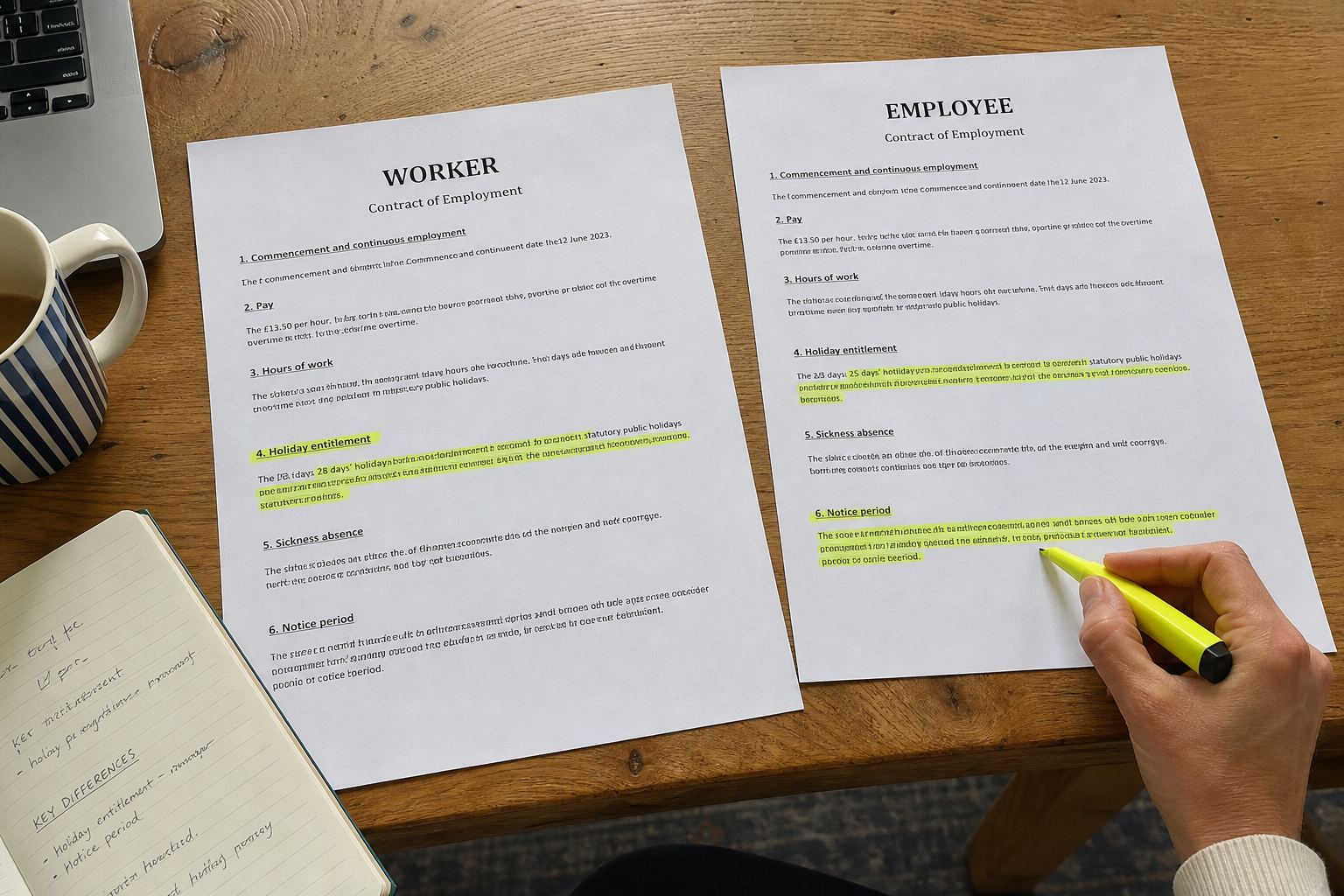
Most pages here assume employee status because that is who can bring ordinary unfair dismissal. Plenty of people who are told they are contractors are workers. That gap is why holiday pay and the minimum wage still apply when a dismissal claim would not.
The two labels that matter
An employee works under a contract of employment. A worker, including the so-called limb (b) worker, does the work personally and is not running a genuine business of their own, even if they are not an employee. Self-employed contractors sit outside both. Tribunals look at control, substitution, mutual obligation, and how the work is actually done. A substitution clause that nobody ever uses is not a magic wand.
Gig platforms, casual hospitality, and “contractor” building work are where this goes wrong most often. Use this page when the label is the first fight.
What workers still get
Workers are inside National Minimum Wage, statutory holiday, working-time limits, and the Equality Act. The written statement of particulars is a day-one worker right as well as an employee right. Whistleblowing and discrimination claims do not need employee status, and nor does protection from being treated worse for working part time or the right to a fair share of tips. Automatically unfair reasons that are framed as worker rights follow the statute, not the job title.
What usually needs an employee
Ordinary unfair dismissal, statutory redundancy pay and statutory lay-off guarantee pay are employee rights. Sick pay and family-leave pay are more mixed: statutory sick pay and statutory maternity, paternity, adoption, shared parental, parental bereavement and neonatal care pay mostly depend on being an employee, though gov.uk says some workers can qualify depending on eligibility (agency workers may qualify for sick pay). Check the gov.uk worker rights page and the page for the pay in question. The two-year qualifying period for ordinary unfair dismissal applies where employment ends before 1 January 2027; where the effective date of termination is on or after that date, it is six months. See the unfair dismissal clock. If you are a worker and not an employee, do not spend the limitation period waiting for a dismissal claim that the tribunal cannot hear.
What to do next
Write down who sets your hours, whether you can send someone else, and how you are paid. Acas can talk through status without you filing anything. If money is missing, the deduction clock still runs. If you were dismissed and you might be an employee, use the tribunal calculator now, not after a status argument has dragged on.
Quick answers
- Am I a worker if my contract says contractor?
- Maybe. Tribunals look at the real relationship. A title is evidence, not the result.
- Can a worker claim ordinary unfair dismissal?
- Usually no. That claim is for employees. Workers still have wage, holiday, and discrimination routes.
- Does this cover Northern Ireland?
- No. This site is England, Wales and Scotland.