Lay-off is not a holiday, and it is not automatically redundancy
Updated November 2026
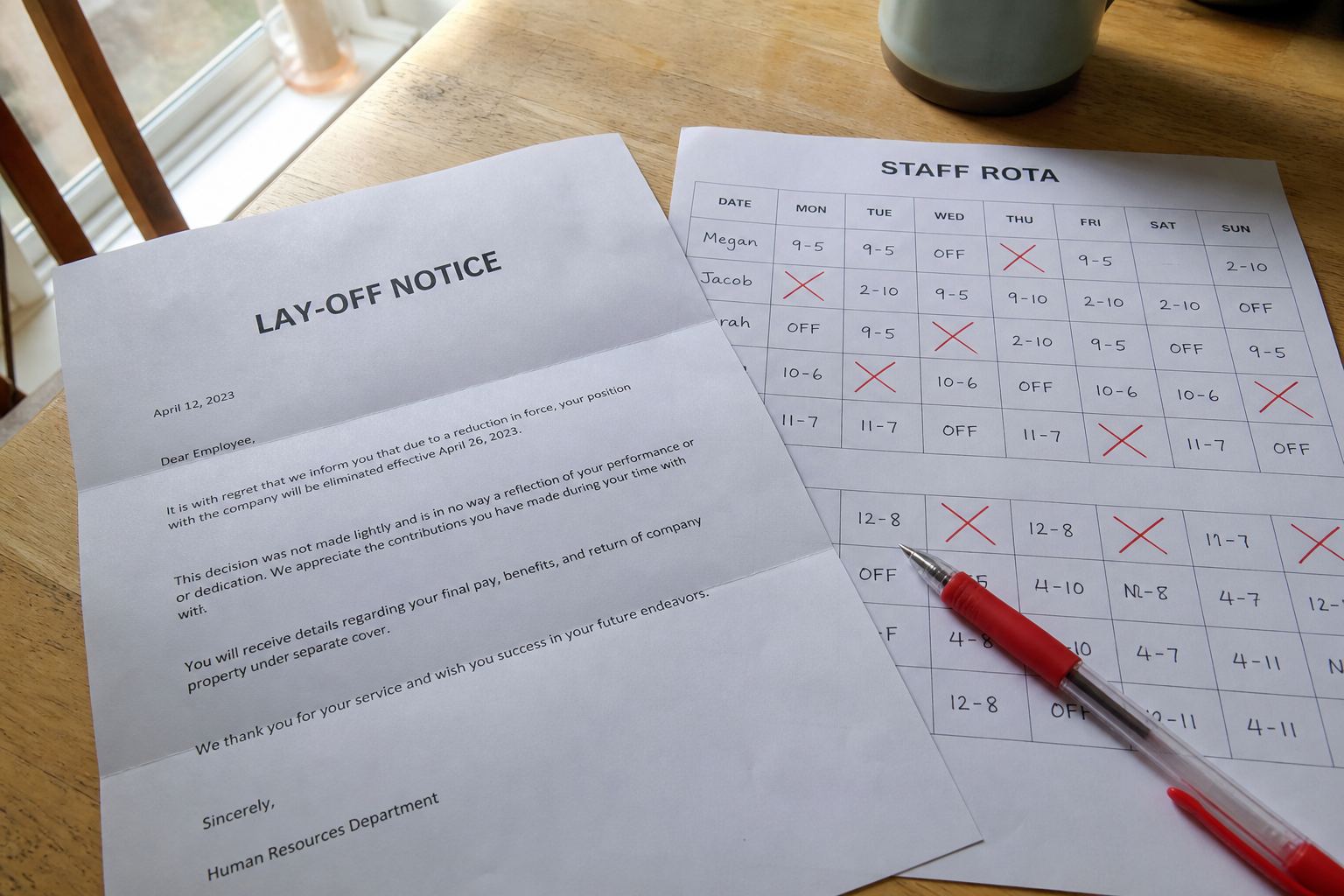
Lay-off means you are sent home because there is no work. Short-time means your hours are cut. Neither is garden leave, and neither is a shutdown you can treat as a holiday. The first question is whether the contract even allows it.
The contract comes first
Without a lay-off or short-time clause, sending you home unpaid is usually a breach. That can be an unlawful deduction, and in a bad enough case a constructive dismissal. With a clause, they can reduce work without ending the job. The clause has to be real, not invented after the order book dips. This is an employee mechanism. Workers who are not employees should look at status and unpaid wages, not guarantee pay.
Guarantee pay
Statutory guarantee pay is the legal minimum for workless days when you are laid off or on short-time. It is up to £41 a day from 6 April 2026, for up to five days in any three months if you normally work five days a week (a maximum of £205). If you normally work fewer days, the limit is that number of days. If you earn less than £41 a day, you get your usual daily rate. You need a month's continuous service, you must be available for work, and you must not refuse reasonable alternative work. A better contractual scheme still wins. Confirm the current cap on gov.uk; it moves each April.
When it becomes redundancy
If you are laid off (no pay because no work is provided) or kept on short-time (paid less than half a week's pay) for four or more weeks in a row, or six weeks in a thirteen-week period (with no more than three of those weeks consecutive), you can give your employer written notice that you intend to claim redundancy pay. You need two years' service, and your notice must be given no more than four weeks after the last qualifying week of the lay-off or short-time. Giving notice is only the first step. Your employer can serve a counter-notice within seven days of your notice. If it does and does not withdraw it, you can claim only if a tribunal decides in your favour. Otherwise you must then resign, giving your contractual notice or at least one week, within three weeks of the end of that seven days (or of the counter-notice being withdrawn, or of the tribunal's decision), or you lose the right to the payment. Acas has the steps. Statutory redundancy pay is a different clock from unfair redundancy, see redundancy deadlines.
What to do next
Find the lay-off clause, or the absence of one. Keep every rota and every guarantee-pay slip. If they are using lay-off to avoid a redundancy consultation, that is a consultation problem as well as a pay problem. Resigning is a required step in a lay-off redundancy claim but the timing is strict, so take advice before you resign. Use the calculator if you think the job has already ended in all but name.
Quick answers
- Can I be laid off with no contract clause?
- Usually not, unless you agree. Sending you home unpaid without a right to do it is often a deduction and can be a breach.
- How much is guarantee pay in 2026?
- £41 a day from 6 April 2026, up to five days in three months. Confirm on gov.uk after the next April change.
- When can I claim redundancy instead?
- After four straight weeks, or six weeks in thirteen, laid off or on less than half pay, if you have two years' service. Give your employer written notice within four weeks of the last qualifying week, then resign with notice within the time the law sets, or the right is lost.