Harassment is a legal word, not just a workplace one
Updated 13 November 2026
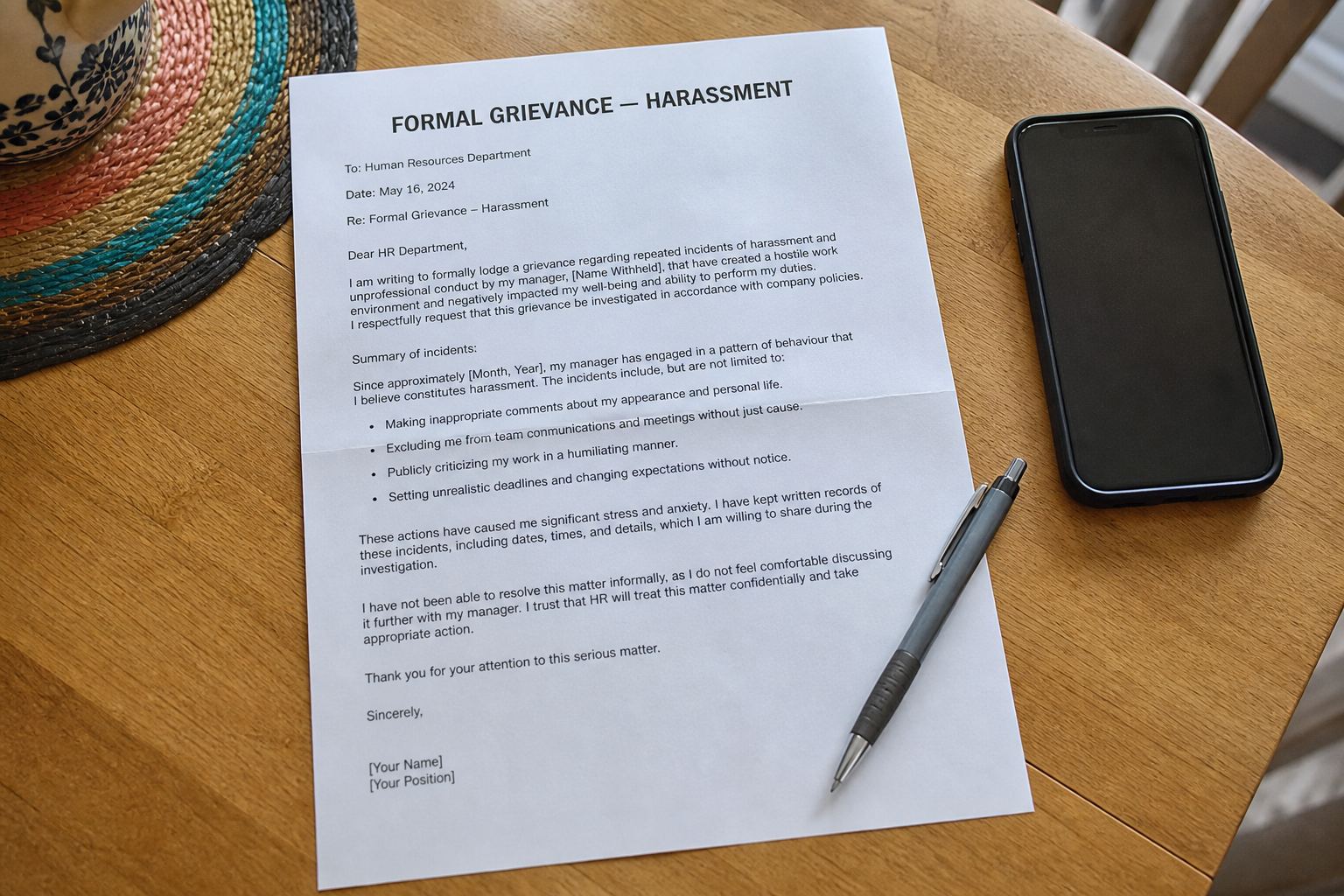
People use harassment for any ugly behaviour at work. The claim that has a six-month clock from 1 October 2026 (three months less a day before that) is a narrower legal word. You do not have to wait for a dismissal to use it.
What the Act actually covers
The harassment provisions cover age, disability, gender reassignment, race, religion or belief, sex and sexual orientation. Pregnancy and maternity, and marriage and civil partnership, are protected characteristics but are not on the harassment list, so poor treatment linked to them is usually argued as discrimination instead. Unwanted conduct related to one of the listed characteristics can be harassment even if it was not aimed at you, and even if the person says they were joking. Sexual harassment is a specific form. Bullying that has no link to a protected characteristic may still be a grievance, a constructive dismissal risk, or a breach of contract. It is not automatically an Equality Act claim.
The ban on harassment covers workers as well as employees, including agency staff and some contractors. The employer's duty to prevent sexual harassment is owed to its employees. Harassment by customers, patients, clients and other third parties has been the employer's responsibility since 30 October 2026: employers must not permit it and are liable if they failed to take all reasonable steps to prevent it. Our page on third-party harassment from 30 October 2026 covers what that means. The Employment Rights Act timeline shows what else has changed and when.
The preventative duty
The Worker Protection (Amendment of Equality Act 2010) Act 2023 added a duty on employers to take reasonable steps to prevent sexual harassment of their employees. It has been in force since 26 October 2024. Since 30 October 2026 the Employment Rights Act 2025 has raised it to all reasonable steps. It is not a promise that nothing will happen. It is a reason tribunals can uplift compensation when an employer did nothing serious to prevent it. Policies in a drawer are not the whole duty. Training, reporting routes, and what happens after a complaint are. Comments about someone's age or menopause symptoms can be harassment too; see menopause at work.
The clock
Discrimination and harassment claims use the act date, not the date you felt ready to talk. For acts on or after 1 October 2026 the ordinary window is six months less a day; for earlier acts it is three months less a day. For conduct over a period, the date is the end of the period. Acas early conciliation pauses the clock. A grievance, an investigation, or an appeal does not. Read discrimination time limits and run the calculator if the date is close.
What to do next
Write the incidents while the dates are still in your head: who, when, what was said, who saw it. Report it through the route the handbook names, and keep a copy. If you are not safe to stay, that is a constructive dismissal and welfare question as well as a harassment one. Speak to Acas, a solicitor, or your union before you resign on a deadline.
Quick answers
- Is bullying the same as harassment?
- Not always. Harassment needs a link to a protected characteristic, or to be sexual harassment. Bullying can still be a grievance or a dismissal issue.
- Does a grievance pause the tribunal deadline?
- No. Only Acas early conciliation pauses limitation.
- Do workers count?
- Yes, for the ban on harassment itself, which covers workers and not only employees. The employer's duty to prevent sexual harassment is owed to its employees.