How to write a flexible working request (with a template)
Updated August 6, 2026
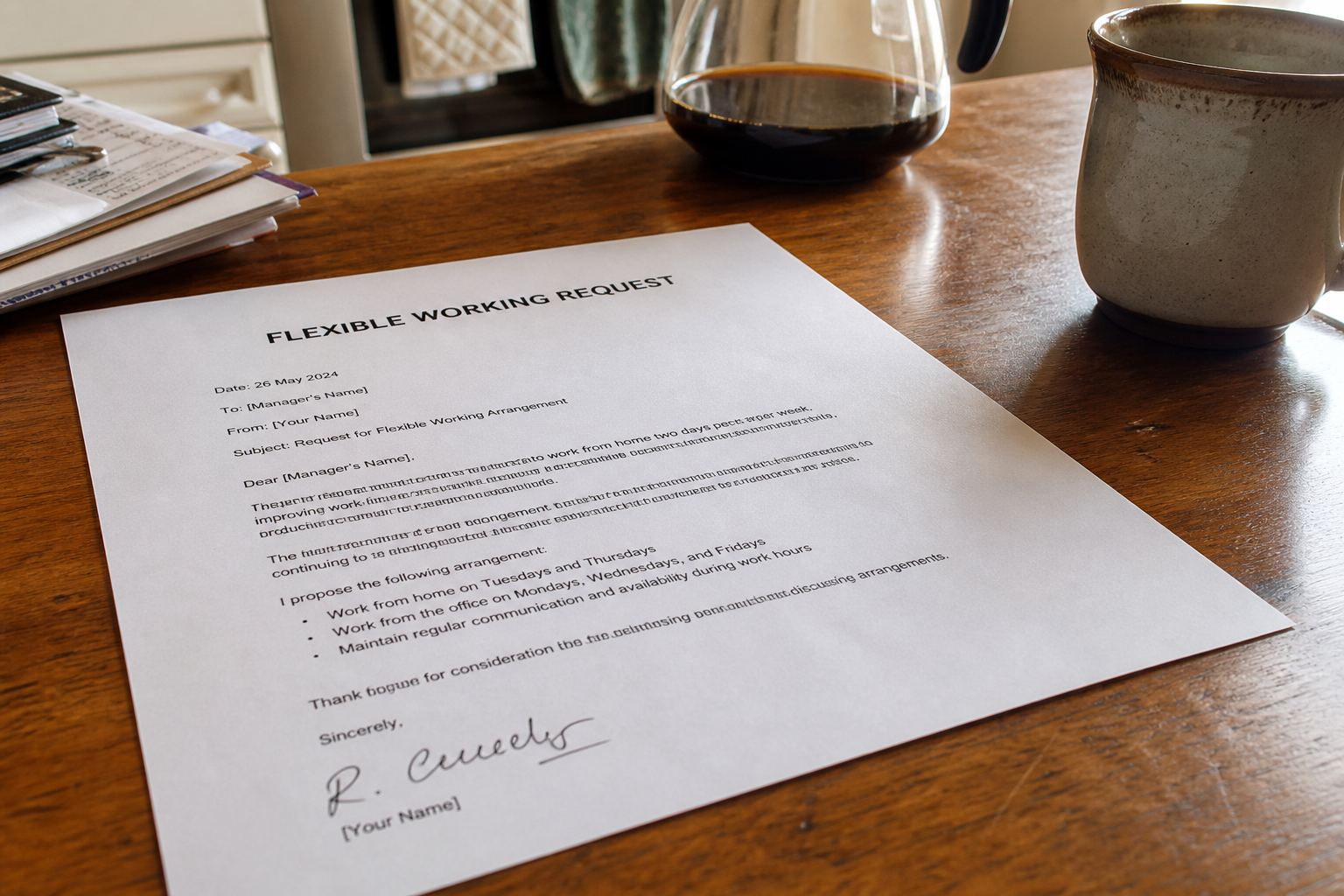
You can make a statutory flexible working request from your very first day in a job. The right to request flexible working needs no qualifying period at all, and it's been that way since April 2024, well before the current round of reforms. What trips people up isn't whether they can ask. It's what happens after they do.
What the day-one right actually gives you
Every employee can make a statutory flexible working request from their first day in a job. You don't need two years' service, you don't need to have passed probation, and you don't need a special reason like childcare or a disability, though you're free to give one if it helps your case. The request has to be in writing, it has to say it's a statutory request, and you can make two of them in any 12-month period.
"Flexible working" covers more than remote work. It includes changes to hours, changes to days worked, compressed hours, job sharing, staggered start and finish times, and where you work from. If you're not sure which of these fits your situation, name the outcome you actually want in the letter rather than a specific mechanism, and let your employer respond to that.
The two-month clock
Once you've submitted a valid request, your employer has to respond within two months, and that includes any appeal. That window can be extended, but only if you agree to it, not because your employer decides they need more time. If two months pass with no response and no agreed extension, that's a breach of the statutory procedure and you have grounds to complain, including to a tribunal in some circumstances.
Your employer is also expected to consult with you before refusing a request outright, rather than simply rejecting it on paper. That doesn't mean they have to say yes. It means they can't ignore you and hope the deadline passes. From autumn 2027 that consultation becomes a set meeting held with a view to reaching agreement, and a refusal will have to be reasonable as well as fit one of the grounds: see the flexible working changes due in autumn 2027.
The eight grounds for refusal
An employer can only refuse a statutory flexible working request on one of eight specific business grounds. They can't refuse just because they'd prefer things stayed as they are; the reason has to fit one of these categories.
| Ground | What it usually looks like in practice |
|---|---|
| Burden of additional costs | The change would cost the business money it can't reasonably absorb. |
| Detrimental effect on ability to meet customer demand | Cover gaps that would hit clients or service levels. |
| Inability to reorganise work among existing staff | No practical way to redistribute your tasks to colleagues. |
| Inability to recruit additional staff | The role can't sensibly be covered by hiring. |
| Detrimental impact on quality | The change would make the output worse, not just different. |
| Detrimental impact on performance | Team or individual performance would suffer. |
| Insufficient work during the proposed working times | There isn't enough work to justify the hours requested. |
| Planned structural changes | A reorganisation already underway that the request would conflict with. |
If your employer refuses, ask which of these eight grounds they're relying on and what evidence supports it. A refusal that doesn't name one of these grounds, or that names one without any real basis, is worth challenging. Acas is the first port of call if you think a refusal was handled unfairly or the two-month deadline was missed; if it escalates further, our guide to the tribunal deadline calculator explains how the claim window now works, including the extended time limits that take effect on 1 October 2026.
Writing the request
Keep it factual and specific. State that it's a statutory request, say exactly what change you want and from what date, and briefly explain the impact if it helps your case, though you don't have to justify yourself extensively. Vague requests are easier to bat back with a vague refusal, so the more concrete you are, the harder that gets.
Template letter
Adjust the details to your situation. This version asks for a change to hours and a hybrid working pattern, but the structure works for most requests.
|
Dear [manager's name], I am writing to make a statutory flexible working request under section 80F of the Employment Rights Act 1996. I would like to change my working pattern from [current pattern, e.g. "five days in the office, 9am to 5pm"] to [requested pattern, e.g. "four days per week, with two of those worked from home"], starting from [proposed start date, giving reasonable notice]. I believe this change would not affect my ability to carry out my role. [Optional: add one or two sentences on how you'd manage handovers, cover, or deadlines under the new pattern, or briefly note your reason for asking if you want to include it.] This is my [first/second] statutory flexible working request in the past 12 months. I understand you are required to respond within two months of receiving this letter, including any appeal, and I would welcome the chance to discuss this with you before a decision is made. Please let me know if you need any further information. Yours sincerely, |
Send it by email where you can, so there's a clear timestamp for the two-month clock, and keep a copy. If your employer has an internal flexible working policy or form, you can still use this letter as the substance of the request, but check whether they want it submitted through a specific system as well.
If things stall
A missed deadline, a refusal with no named ground, or a decision made without any consultation are all things Acas can help with informally before matters get more formal.
Don't wait for a better moment to raise it. Fill in the template above with your own dates, send it to your manager by email today, and keep a copy so you've got a clear timestamp if the two-month clock becomes an issue later.
Quick answers
- Is flexible working a day-one right?
- The right to request is a day-one right. That is not a right to have the request granted.
- How many requests can I make?
- Two statutory requests in any 12-month period, under the current rules.
- Does a refused request pause any other claim deadline?
- No. If the refusal is also discrimination or a detriment, the ordinary tribunal clocks still run.