Maternity and paternity leave: what's actually a day-one right
Updated 28 September 2026
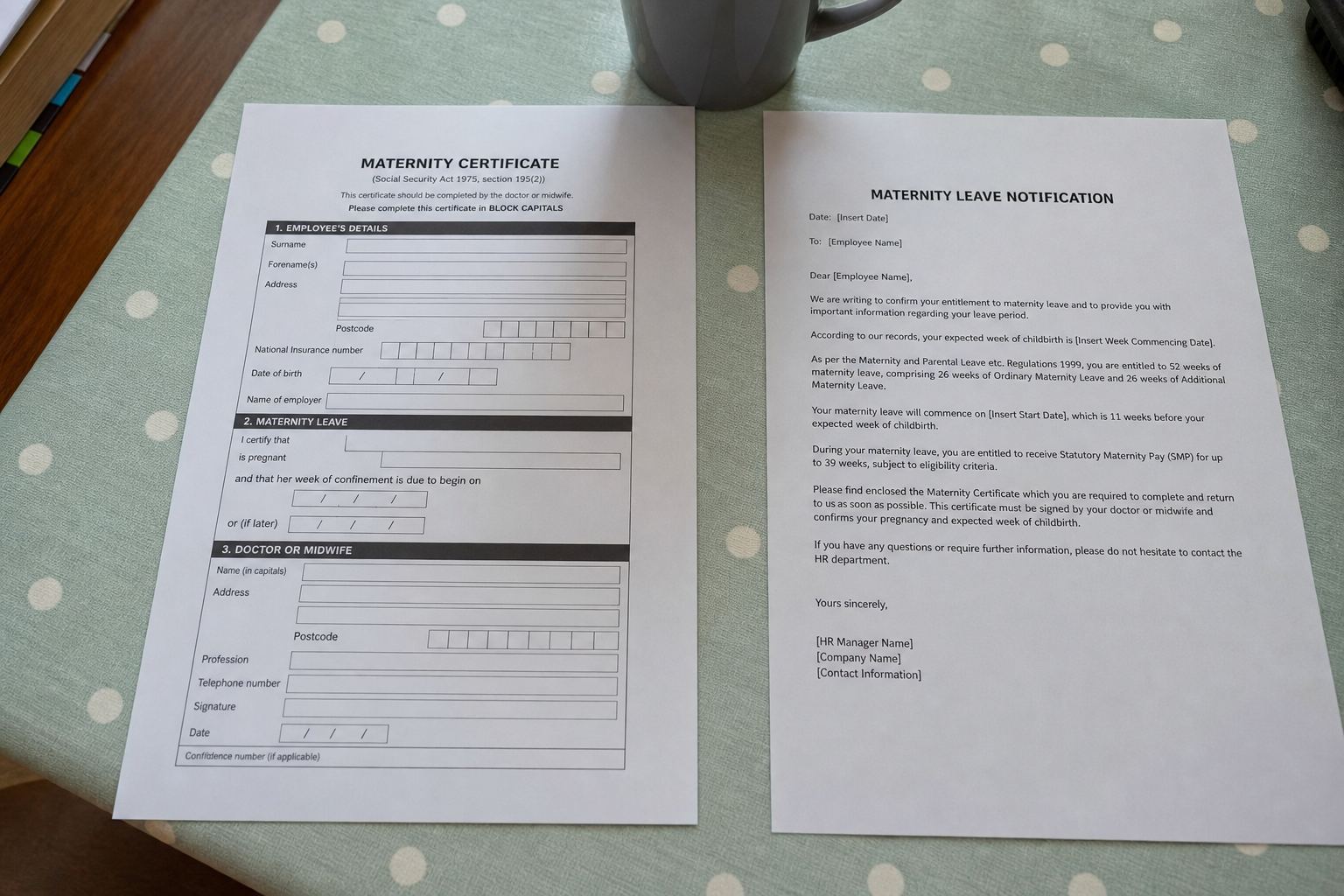
Leave eligibility and pay eligibility are two different tests, not one. "Am I entitled to maternity or paternity leave" and "will I be paid for it" are separate questions, and mixing them up is the single most common mistake people make when they first read about their rights. Pull up your contract, check how long you've worked for your employer, and check your average weekly earnings against the current lower earnings limit on gov.uk before you assume the statutory minimum is all you'll get, or that you don't qualify at all.
Leave and pay are not the same right
Employment law treats the right to take time off and the right to be paid while you're off as two separate entitlements, governed by separate rules. You can have a day-one right to leave and still fail to qualify for statutory pay during that leave, because pay usually comes with a length-of-service test and an earnings test that leave does not. Employers sometimes blur this distinction, deliberately or not, and tell staff they're "not eligible" for time off when what they actually mean is the staff member won't get statutory pay. Those are different conversations, and it's worth having both of them separately with HR.
Maternity leave: a day-one right, full stop
The right to take maternity leave, up to 52 weeks in total, is available from your first day of employment. This isn't part of the 2025 or 2026 reform programme; it's long-standing law and doesn't depend on how long you've worked for your employer or how many hours you do. Statutory Maternity Pay is different: it has its own qualifying conditions around length of service and earnings, covered below. Plenty of new mothers are entitled to take the full 52 weeks off but only get statutory pay for part of it, or none of it, so it pays to check both halves of the question early.
Paternity leave: day one since 6 April 2026
This is where things genuinely changed, and it's worth being precise about it. Before 6 April 2026, paternity leave came with a minimum length-of-service requirement, so new starters could be shut out of it entirely in their first months in a job. From 6 April 2026, paternity leave became a day-one right, with no qualifying period. Statutory Paternity Pay did not become a day-one right: you still need 26 weeks' continuous employment by the end of the qualifying week, the 15th week before the baby is due, and average earnings of at least £129 a week (the 2026/27 figure). The day-one leave right is a genuine, dated improvement, not a proposal still working through Parliament, and it sits alongside the wider set of staggered changes under the Employment Rights Act 2025, which received royal assent on 18 December 2025 and is commencing in stages rather than all at once. If you want the fuller picture of what's landed and what's still pending, the timeline of Employment Rights Act 2025 changes lays it out date by date.
Where the two entitlements stand right now
| Right | Leave: day-one right? | Pay: qualifying conditions? |
|---|---|---|
| Maternity leave (up to 52 weeks) | Yes, long-standing law | Statutory Maternity Pay needs minimum service and an earnings check |
| Paternity leave | Yes, since 6 April 2026 | Statutory Paternity Pay still needs 26 weeks' service and an earnings check |
| Shared parental leave | No: the parent taking it needs 26 weeks' continuous service, plus other tests | Has its own separate eligibility tests, check gov.uk for current detail |
| Ordinary unpaid parental leave | Day-one right | Unpaid by default; some employers enhance it contractually |
Statutory pay still has its own tests
Don't read the paternity change as meaning pay is now unconditional across the board, because it isn't. Statutory Maternity Pay still requires a minimum period of continuous service and average weekly earnings at or above the lower earnings limit, both checked against specific reference dates tied to your baby's due date. Statutory Paternity Pay works the same way: the leave became a day-one right in April 2026, but the pay still has its service and earnings tests. The actual rates and thresholds change each tax year, so treat any figure you see quoted as something to confirm on gov.uk rather than something to rely on from memory, including mine.
If your employer gets this wrong, or dismisses you around it
Refusing leave you're entitled to, or dismissing someone because they're pregnant or have taken paternity leave, is the kind of dispute that can end up in an employment tribunal, and the clock on that starts running from your effective date of termination or from the act complained of. If the situation happened, or will happen, on or after 1 October 2026, you get six months less a day to bring a claim instead of the old three months less a day; anything before that date stays on the shorter limit. Acas early conciliation pauses that clock while they try to resolve things, and you're guaranteed at least a further month after the EC certificate to lodge a claim even if you were nearly out of time when you contacted them. If you're anywhere close to a deadline, run your own dates through the employment tribunal deadline calculator rather than guessing, because getting this wrong by even a day can end a genuine claim before it starts.
What won't change again, and what still might
Whatever else moves through Parliament between now and whenever the rest of the Employment Rights Act 2025 finishes commencing, two facts will stay true: maternity leave has been, and will remain, a day-one right regardless of service length, and paternity leave became a day-one right on 6 April 2026, a date that has already passed. What's genuinely still in motion is everything downstream of that, exact statutory pay rates each tax year, the staggered rollout of other ERA provisions like the unfair dismissal qualifying period, and how tribunals apply the transitional rules around the October 2026 time limit change. New family rights are still to come too, including bereavement leave after a pregnancy loss or the death of a close relative, due in April 2027. Check the current position before you rely on a specific number, but don't let uncertainty about the fine print make you doubt the basic entitlement itself.
Quick answers
- Is maternity leave a day-one right?
- Yes. Up to 52 weeks of leave does not depend on length of service. Statutory Maternity Pay has its own service and earnings tests.
- When did paternity leave become day-one?
- 6 April 2026, for paternity leave. Statutory Paternity Pay still needs 26 weeks' service and average earnings of at least £129 a week (the 2026/27 figure).
- If I am dismissed while pregnant, do I need two years' service?
- No. Pregnancy and maternity dismissals are automatically unfair. There is still a filing deadline.