Zero-hours contract rights under the 2025/26 reforms
Updated 28 September 2026
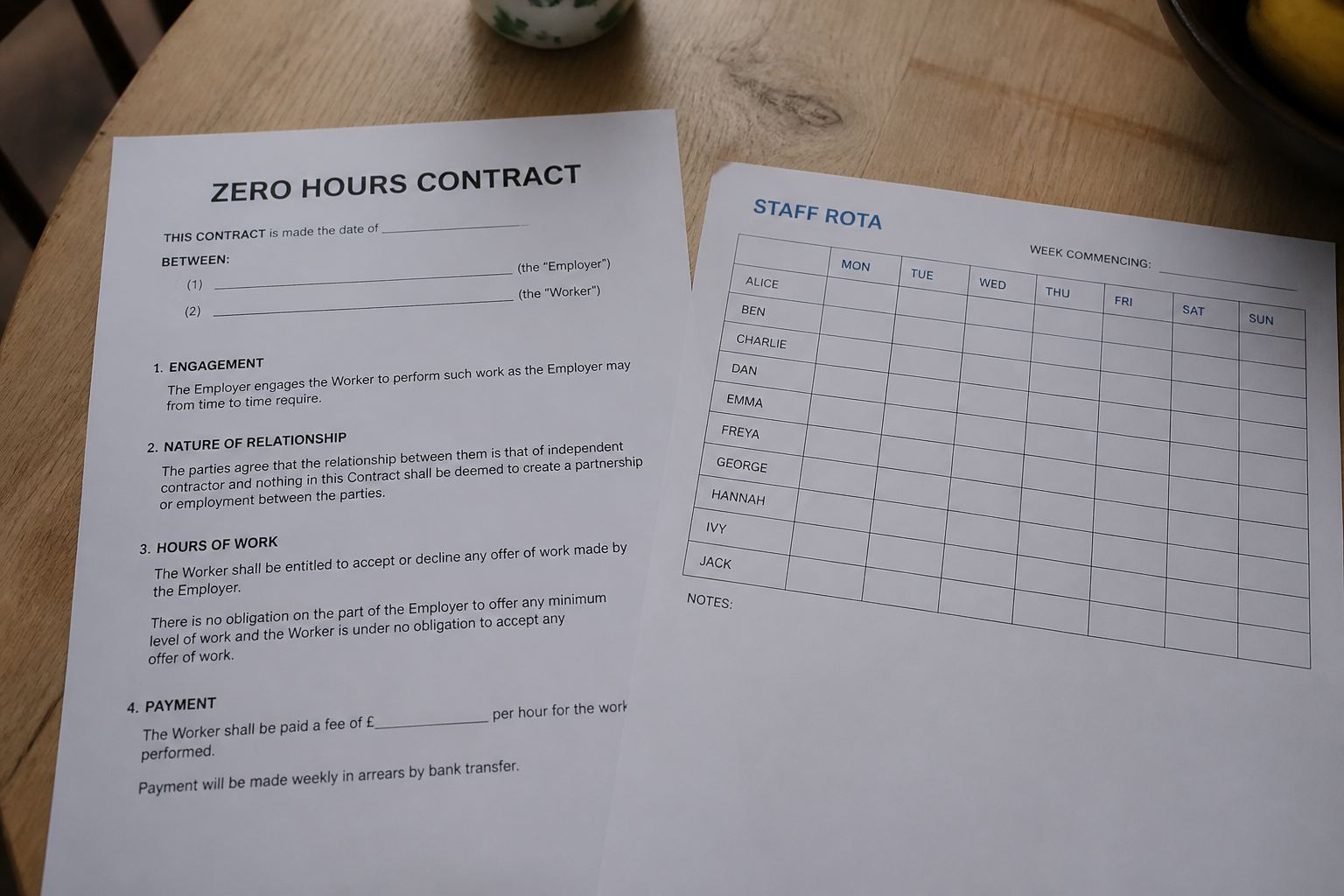
Three separate rights are landing for people on zero-hours and low-hours contracts, built into the Employment Rights Act 2025: a right to guaranteed hours that reflect what you've actually been working, a right to reasonable notice of your shifts, and a right to compensation when a shift is cancelled, moved or cut short at short notice.
What the reforms are trying to fix
If you're on a zero-hours or low-hours contract, you'll know the pattern. Some weeks you're offered plenty of shifts. Other weeks almost nothing, with no real explanation. Shifts get added or pulled at short notice, and there's rarely any compensation when that happens, even if you'd already turned down other work or arranged childcare around it.
The Employment Rights Act 2025 sets out to change that, though not all at once. Provisions are commencing on staggered dates rather than in one go, and the detail for zero-hours rights specifically is still being filled in through secondary legislation. Our timeline of the Employment Rights Act 2025 changes tracks what's actually in force as dates get confirmed, which is worth checking before you rely on anything below as settled.
The right to guaranteed hours
The core idea is straightforward. If you regularly work more hours than your contract says, over a set reference period, you should be offered hours that reflect that reality rather than staying nominally on zero hours forever. What counts as "regularly," how long the reference period runs, and how the offer of guaranteed hours actually works in practice are all details due to be set out in regulations. We're not going to guess at a specific number of weeks here, because it hasn't been confirmed, and guessing wrong would do you no favours.
The Act already says you will be able to accept or reject a guaranteed-hours offer once this part is in force, so you could keep your existing flexible arrangement. Not replying in time counts as a rejection. If flexibility suits you better than fixed hours, that's a fair thing to want, but don't take anyone's confident-sounding claim about how it'll work as final until it's on gov.uk.
Reasonable notice of shifts
Separately from guaranteed hours, the reforms introduce a right to reasonable notice of when you're expected to work a shift, and reasonable notice if a shift you've already been given is changed. What "reasonable" means will depend on the job and the circumstances, which is fairly normal for employment law drafting. The Act doesn't set a hard minimum. Instead, notice given less than an amount set in regulations will be presumed unreasonable unless the employer shows otherwise. That amount hasn't been fixed yet, so treat any number you see quoted elsewhere with caution until it's confirmed.
Getting paid when a shift falls through
The third strand is compensation. If your employer cancels a shift, moves it, or cuts it short with less notice than a cut-off to be set in regulations, you're due to gain a right to payment for that. How the payment is calculated, whether it's the full shift, a proportion, or something else, hasn't been finalised in a way we're confident stating here. This is genuinely one to watch rather than one to plan around yet.
| New right | What it covers | Where things currently stand |
|---|---|---|
| Guaranteed hours | An offer of hours reflecting what you regularly work over a reference period | Reference period and mechanics to be set by regulations, not yet confirmed |
| Notice of shifts | Reasonable notice before you're asked to work, and before a scheduled shift is changed | Cut-off for presuming notice unreasonable not yet set |
| Cancellation compensation | Payment when a shift is cancelled, moved, or cut short at short notice | Calculation method not yet finalised |
Where this connects to unfair dismissal and tribunal claims
Zero-hours and low-hours work often means short, intermittent engagements, which historically made it harder to build up the service needed to bring an unfair dismissal claim. That's shifting too. The qualifying period for unfair dismissal is being reduced from two years to six months (the government moved away from the originally proposed day-one right), and the change applies where your employment ends on or after 1 January 2027.
If a dispute over guaranteed hours, shift notice, or cancelled shifts ever tips into something you're dismissed or penalised for, the clock for bringing an employment tribunal claim starts running from the date that happened, known as the effective date of termination for dismissals. From 1 October 2026, that clock generally runs for six months less a day rather than the old three months less a day, though the longer limit only applies where the act complained of falls on or after that date, and you still have to go through Acas early conciliation first. Our employment tribunal deadline calculator works out which regime applies to your dates and accounts for how contacting Acas pauses the clock.
What to do in the meantime
Keep a record of the shifts you're offered, worked, and cancelled, along with any notice you were given. It's useful evidence whether you're negotiating informally with your employer now or relying on the reference period once guaranteed hours rights are actually in force. Don't assume a specific figure you've seen quoted online, a number of weeks for the reference period, a number of days for notice, is accurate; the regulations that will fix those numbers haven't all landed yet.
Because so much of this is still moving, it's worth checking back against our dated rundown of the Employment Rights Act 2025 changes as commencement dates for guaranteed hours, shift notice, and cancellation pay are confirmed, since that's where the practical detail you'll actually need will show up first.
Quick answers
- What new rights are coming for zero-hours workers?
- Guaranteed hours that reflect hours actually worked, reasonable notice of shifts, and pay when a shift is cancelled or cut short at short notice. Detail and commencement are still landing in stages.
- Are those rights already in force?
- Treat each strand as something to check on gov.uk. Secondary legislation is still filling in the numbers.
- Can I still claim unfair dismissal on a zero-hours contract?
- Status and qualifying service still matter. The new shift rights do not replace the ordinary tribunal clocks.