Statutory sick pay from day one, explained
Updated 28 September 2026
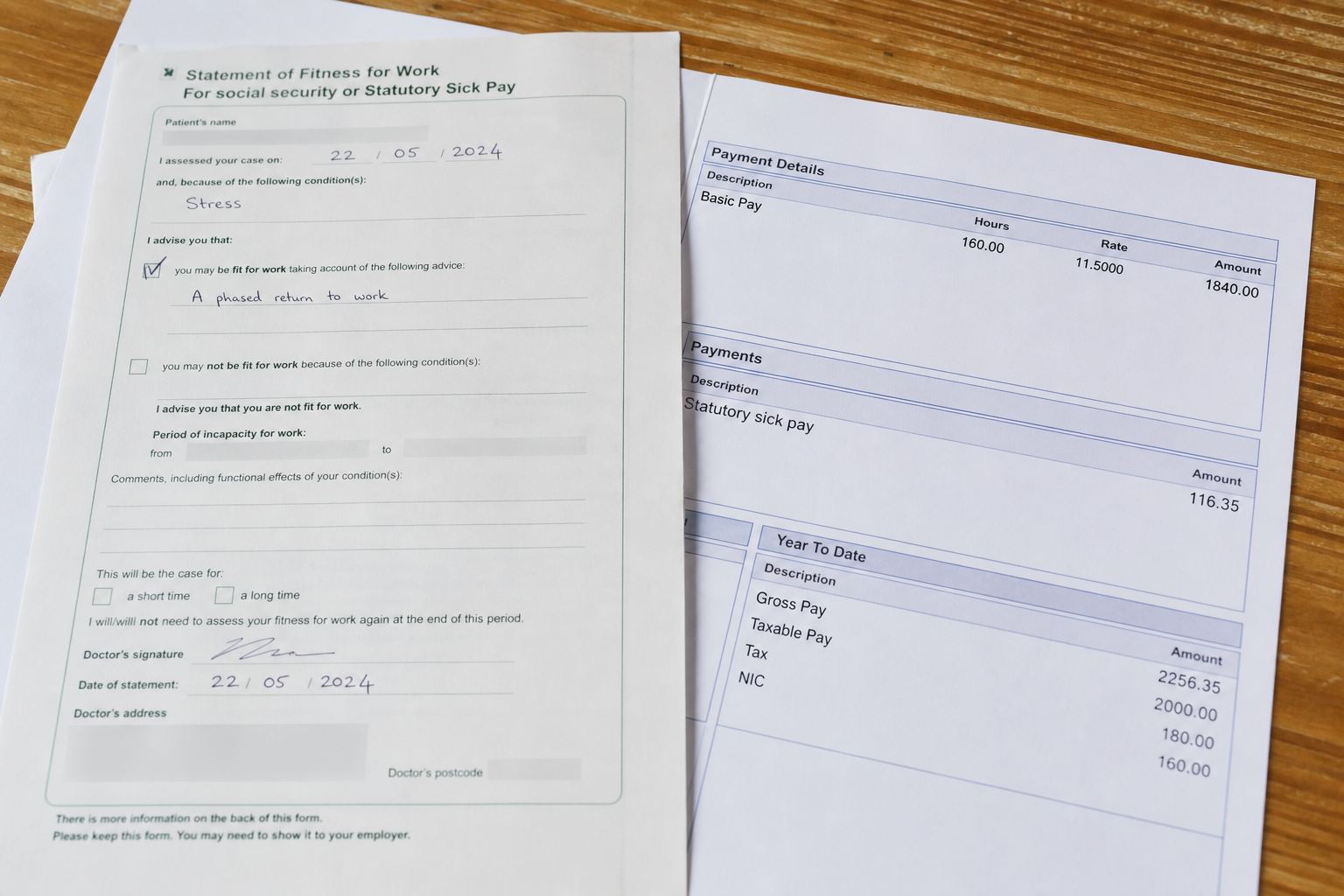
Since 6 April 2026, statutory sick pay has started from your first day off sick instead of your fourth, and the minimum earnings rule that used to shut the lowest-paid workers out of it altogether has gone.
Two SSP rules changed on 6 April 2026
Two separate rules inside statutory sick pay (SSP) were reformed by the Employment Rights Act 2025, which received royal assent on 18 December 2025, and both changes took effect on 6 April 2026. The first was the waiting days rule. The second was the earnings threshold. Both used to reduce who got paid, and when.
This isn't a change to the idea of SSP itself. It's still a weekly payment from your employer while you're off sick, not full pay: £123.25 a week, or 80% of your normal weekly earnings if that is lower, for up to 28 weeks. You still need a fit note if you're off for more than seven days in a row. What changed is who qualifies, how quickly the money starts, and, for lower earners, an 80% cap on the rate.
The three unpaid days have gone
Before 6 April 2026, the first three qualifying days (usually working days) of a period of sickness were called waiting days. They were unpaid. SSP only kicked in from day four onwards, assuming you were still off. If you were back at work within those three days, you got nothing from SSP at all for that spell of illness, only whatever your employer's own sick pay scheme provided, if it had one.
The reform removed the waiting days rule. SSP is now payable from the first day of a qualifying sickness absence, not day four. For someone who's regularly off for a day or two at a time, that's the difference between routinely getting nothing and routinely getting paid.
The earnings threshold has gone too
The second change matters just as much, arguably more, for the lowest earners. Until 6 April 2026, to qualify for SSP at all you needed to earn at least the Lower Earnings Limit, a weekly earnings threshold averaged over a set reference period. Fall below it and you didn't just get a smaller payment, you got no SSP whatsoever, however long you were off sick.
That rule always hit part-time workers and people with multiple small jobs hardest, since it's easy to sit under the threshold in any single job even while working plenty of hours overall. The reform removed the Lower Earnings Limit requirement, so eligibility no longer depends on clearing that bar. Instead, if 80% of your normal weekly earnings is less than the flat rate, that is what you get.
| Rule | Before 6 April 2026 | From 6 April 2026 |
|---|---|---|
| When payment starts | Day 4 of sickness absence (first 3 waiting days unpaid) | Day 1 of sickness absence |
| Minimum earnings to qualify | Must earn at least the Lower Earnings Limit | No Lower Earnings Limit requirement |
| Weekly rate | A flat weekly rate | £123.25, or 80% of normal weekly earnings if that is lower |
| Who's covered | Employees earning at least the Lower Earnings Limit | Employees who have done some work for the employer, whatever they earn |
The £123.25 figure applies from 6 April 2026. The flat rate is normally uprated each April, so from 6 April 2027 check the current rate on gov.uk before you budget around it.
What this means if you're off sick
If you're a low earner who previously got nothing from SSP because your pay sat under the earnings threshold, this reform brought you into the system for the first time. If you're someone who's regularly off for short spells, and used to lose the first three days each time, day-one payment closed that gap.
None of this touches contractual sick pay. Plenty of employers pay more than the statutory minimum, sometimes full pay for a set number of weeks, under their own scheme. SSP is the floor, not the ceiling. Always check your contract or staff handbook first, since a better company scheme simply overrides the statutory rules in your favour.
It's also worth being clear that SSP eligibility rules are a separate question from maternity leave, which is a day-one right regardless of service length, though statutory maternity pay has its own separate qualifying conditions. Don't assume rules from one area of sick or family leave carry across to another. The same goes for the new general bereavement leave: from April 2027 it is due to be a separate, unpaid right (paid parental bereavement leave after the death of a child continues), and if a loss leaves you unwell, you may also be able to get sick pay under the usual rules.
When did this take effect
Both changes took effect on 6 April 2026, under the Employment Rights Act 2025 (Commencement No. 3 and Transitional Provisions) Regulations 2026. Those regulations also have transitional rules for people who were already off sick immediately before 6 April 2026 and stayed off after it. The rest of the Act is coming in stages, and our timeline of what's changed under the Employment Rights Act tracks those dates.
If a dismissal happens around the same time as a sickness absence dispute, for example if you're pushed out while off sick and think it's linked to raising a grievance about it, the clock for bringing a tribunal claim runs separately from any of this. Our tribunal deadline calculator works out your actual limitation date, including the extended time limits and the effect of Acas early conciliation, which is worth knowing whatever your sick pay position.
What to do next
Open your contract or staff handbook now and check whether your employer already offers company sick pay above the statutory minimum, since that answer often matters more to your actual pay packet than SSP does. If you're off sick, tell your employer by its deadline, or within seven days if it hasn't set one, and get a fit note if you're off for more than seven days in a row.
Quick answers
- Does statutory sick pay start from day one now?
- Yes. Since 6 April 2026, SSP has been payable from the first full day you are off sick that you would normally have worked, and the Lower Earnings Limit no longer applies. The rate is £123.25 a week, or 80% of your normal weekly earnings if that is lower.
- Is SSP the same as contractual sick pay?
- No. SSP is the statutory floor. A better company scheme still wins.
- Does a sick-pay dispute pause a dismissal deadline?
- No. The tribunal clock for a dismissal or deduction claim is separate.